
Hello Odokai
Enterprise AI orchestration. Any model, any infrastructure. Chat for immediate answers, or build agents and workflows that run where you need them.
We are excited to introduce Odokai: a single platform where you ask for outcomes and get them. No more juggling vendors, rewriting integrations, or locking your organisation into one AI stack. Odokai routes you to the right place: chat for quick answers, or plans and workflows that scale.
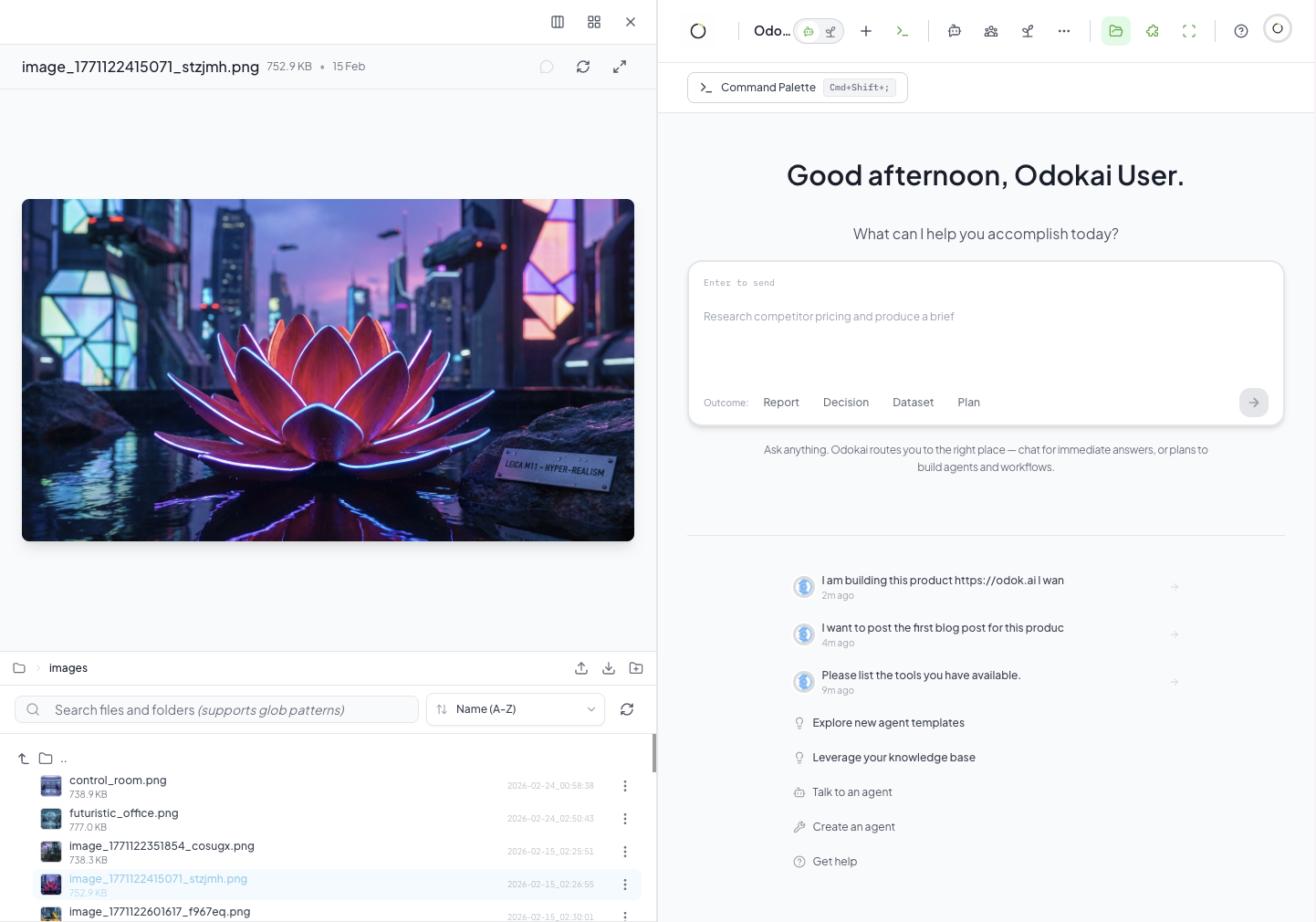
The place to work on outcomes
From the moment you open Odokai, the interface is built around one question: What can I help you accomplish today? You can dive straight into a conversation, request a report, a decision, a dataset, or a plan. The platform then connects you to the right agents, tools, and workflows so you spend less time switching apps and more time on results.
Gartner and others point to a future where enterprise applications increasingly rely on task-specific and agentic AI. Odokai is the platform to build them on.
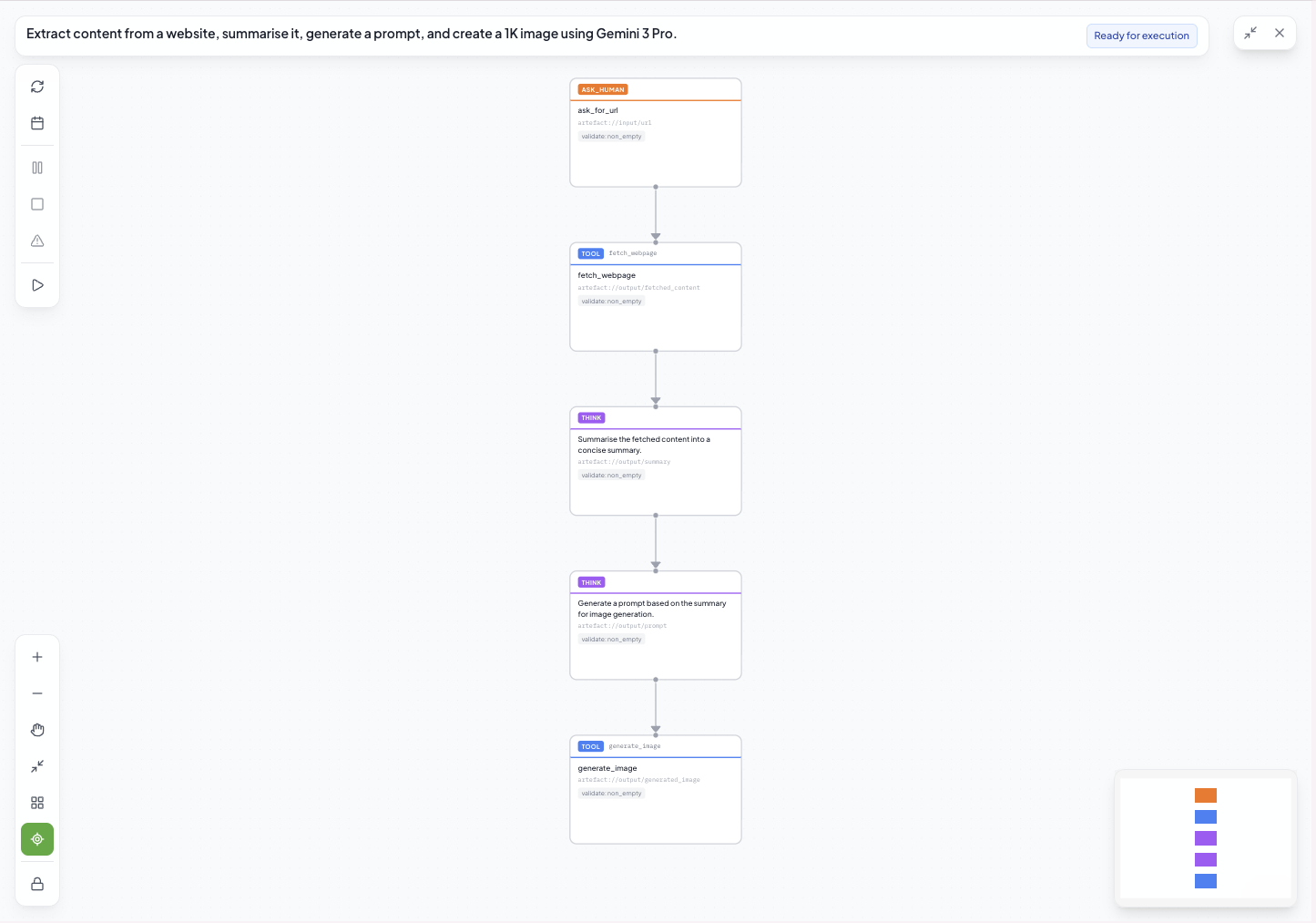
Workflows that chain tools and models
Beyond chat, Odokai lets you build visual workflows that combine human input, tools, and AI in a single pipeline. For example: ask for a URL, fetch the page, summarise the content, generate an image prompt from that summary, and produce an image, all in one flow, ready for execution.
Orchestration you can inspect and run
Larger pipelines, like processing web content for typography, colour, layout, and components, run as orchestrations. You see the full DAG, validation status, and any warnings before execution. Built-in tools such as screenshot capture, scraping and summarisation, and image-prompt generation slot into these pipelines so you can tailor them to your use case.
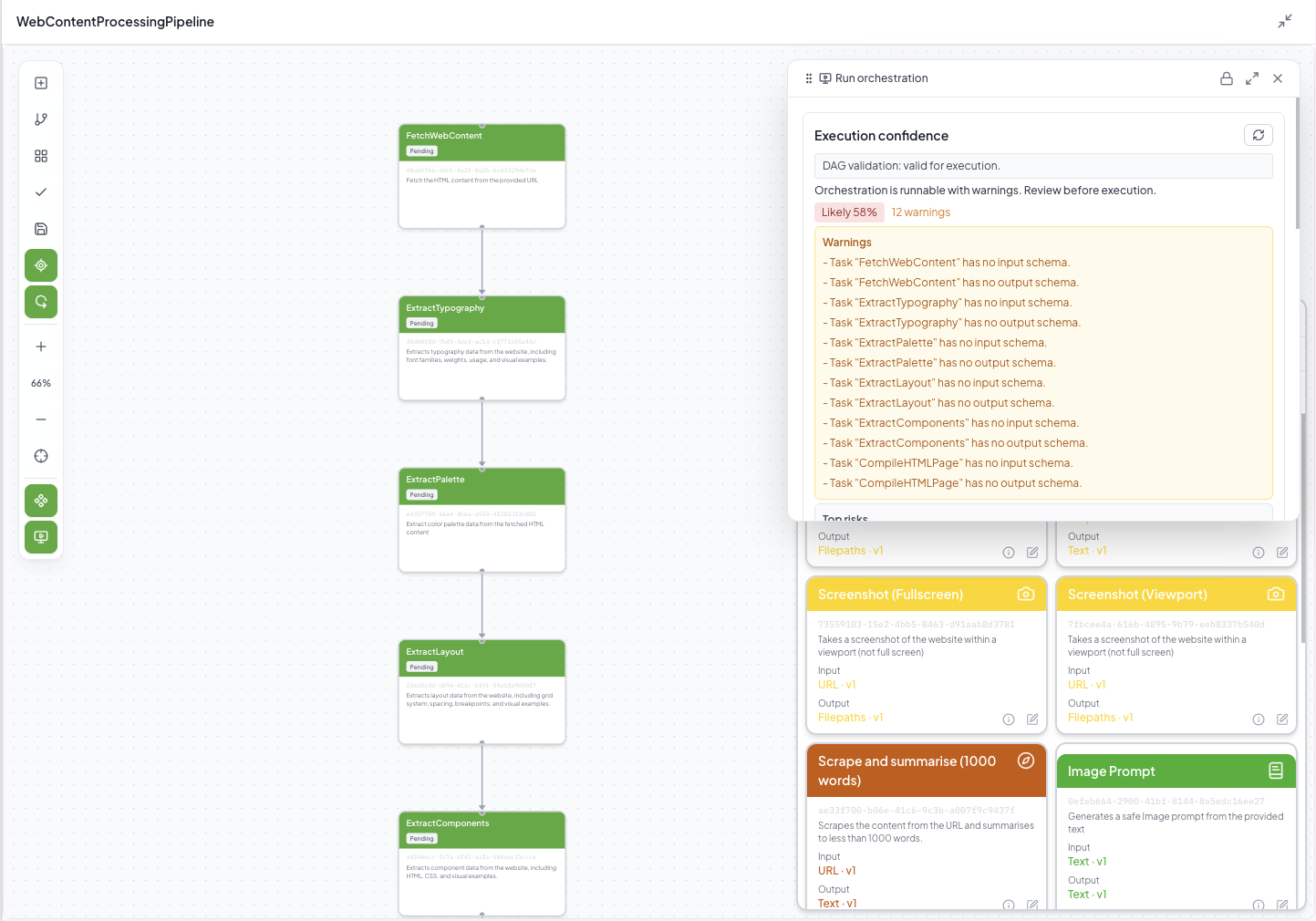
Pipelines can be designed and reviewed before run: validation, confidence, and warnings are surfaced in one place so you stay in control.
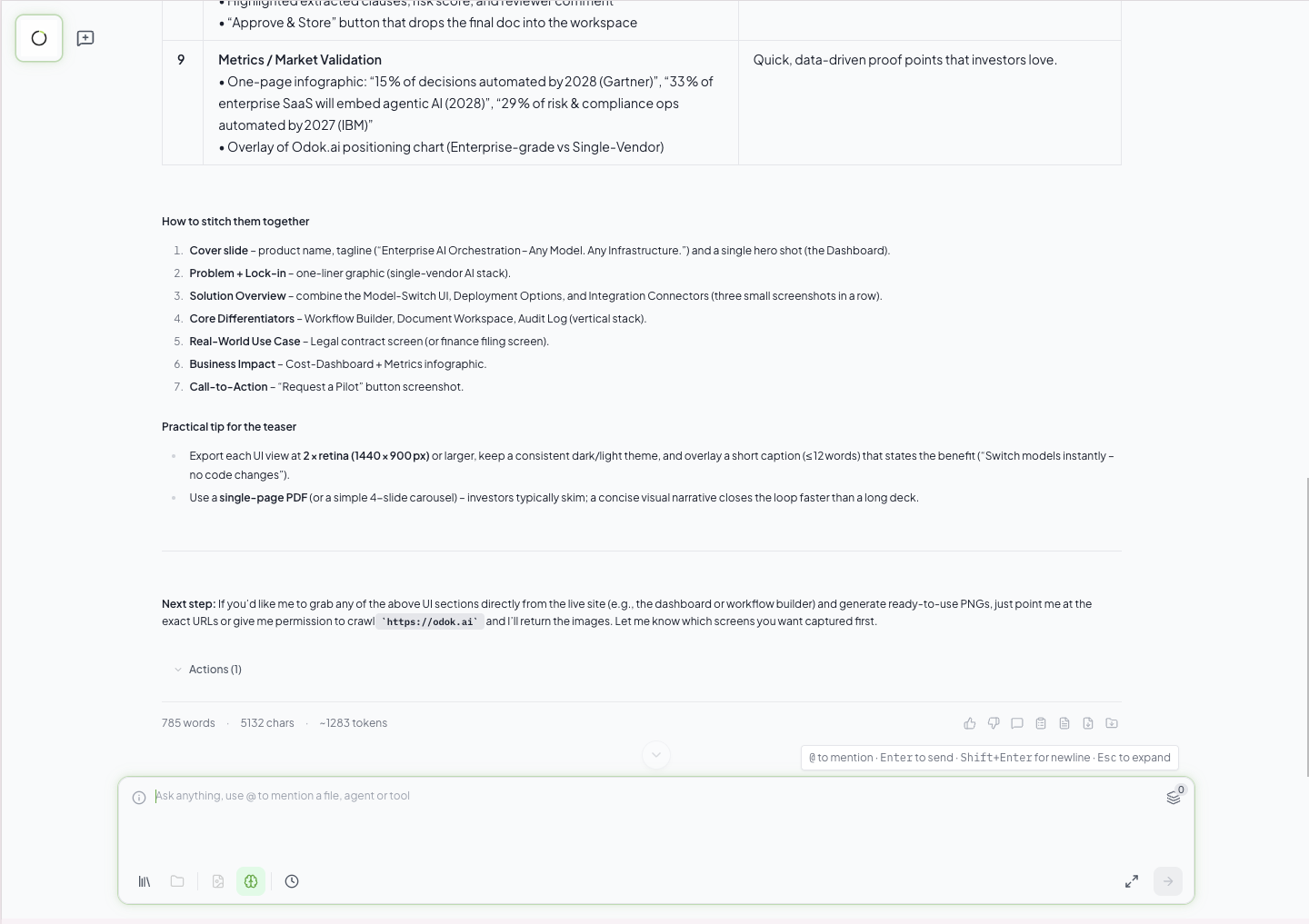
One registry for all your models
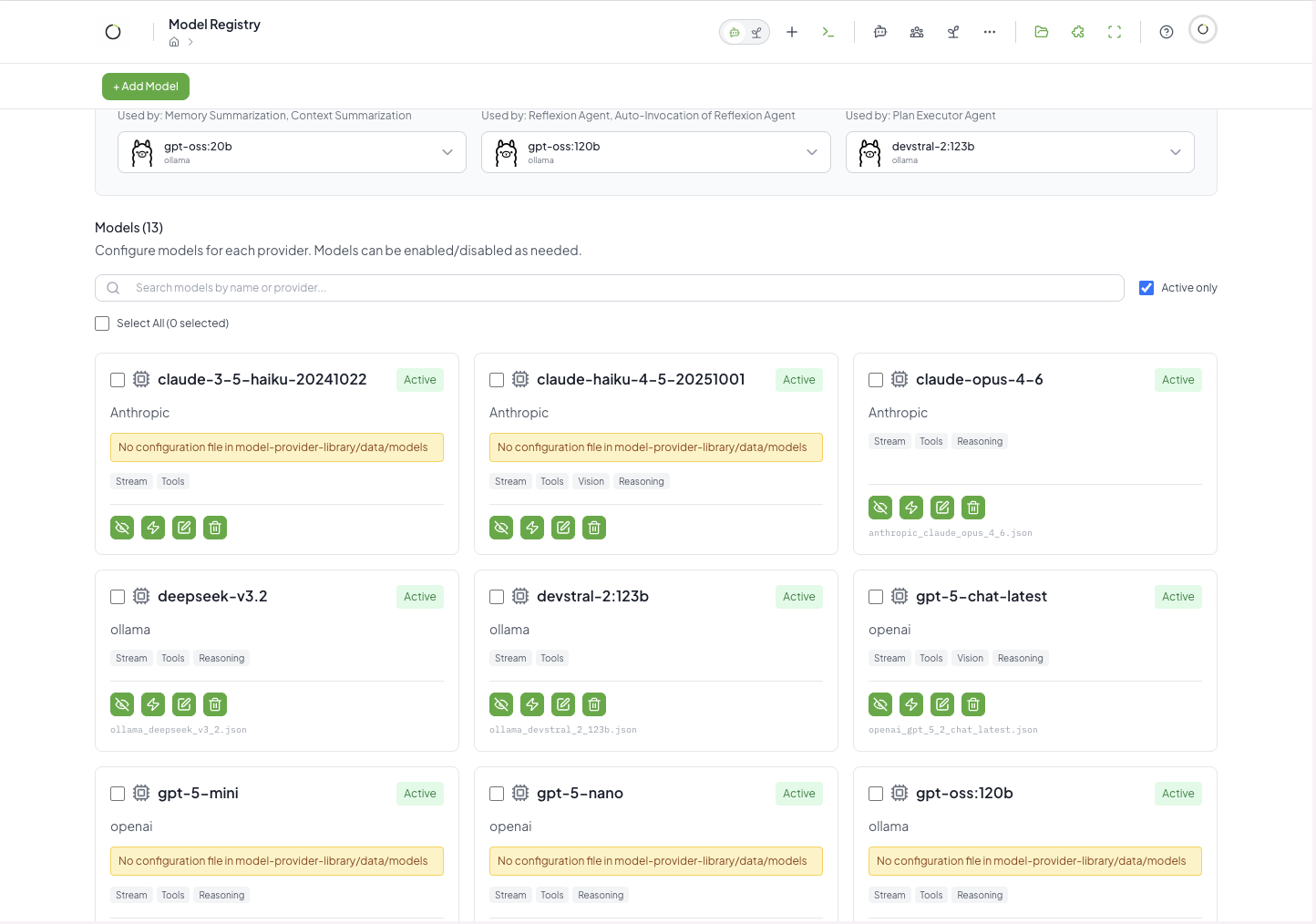
Odokai is built to work with multiple providers and model sizes. The Model Registry lets you add and configure models from Anthropic, OpenAI, Ollama, and others. Assign models to agent roles (for example memory or context summarisation, reflexion, or plan execution) and enable or disable them as needed. Stream, tools, vision, and reasoning capabilities are visible at a glance so you can choose the right model for each job.
What’s next
This is just the beginning. We are building Odokai for enterprises that want AI orchestration without vendor lock-in: deploy on your cloud or on-prem, mix open and commercial models, and keep full visibility over cost and audit. For more on how AI agents are changing enterprise work, see our posts on delegating to AI agents and why users want outcomes, not apps. If you want to see the platform in action or discuss a pilot, get in touch.
Enterprise AI orchestration. Any model. Any infrastructure.